 Mene sisältöön
Everyone’s talking about “going green” on the water, but I’ve seen some solar installations that look like they were put together with hope and a prayer. If you’re serious about energy independence, you need to stop thinking about where the panel fits and start thinking about how it’s secured.
In the cold waters of Estonia or the heat of the Med, a solar panel is a giant sail. If your mounting isn’t rock-solid, the sea will eventually take it back. Here’s how to do it right.
1. Choosing Your Weapon: Rigid vs. Flexible
Rigid Panels: These are the gold standard. They’re efficient, durable, and encased in a sturdy frame. If you have the space for a solar panel frame, go rigid.
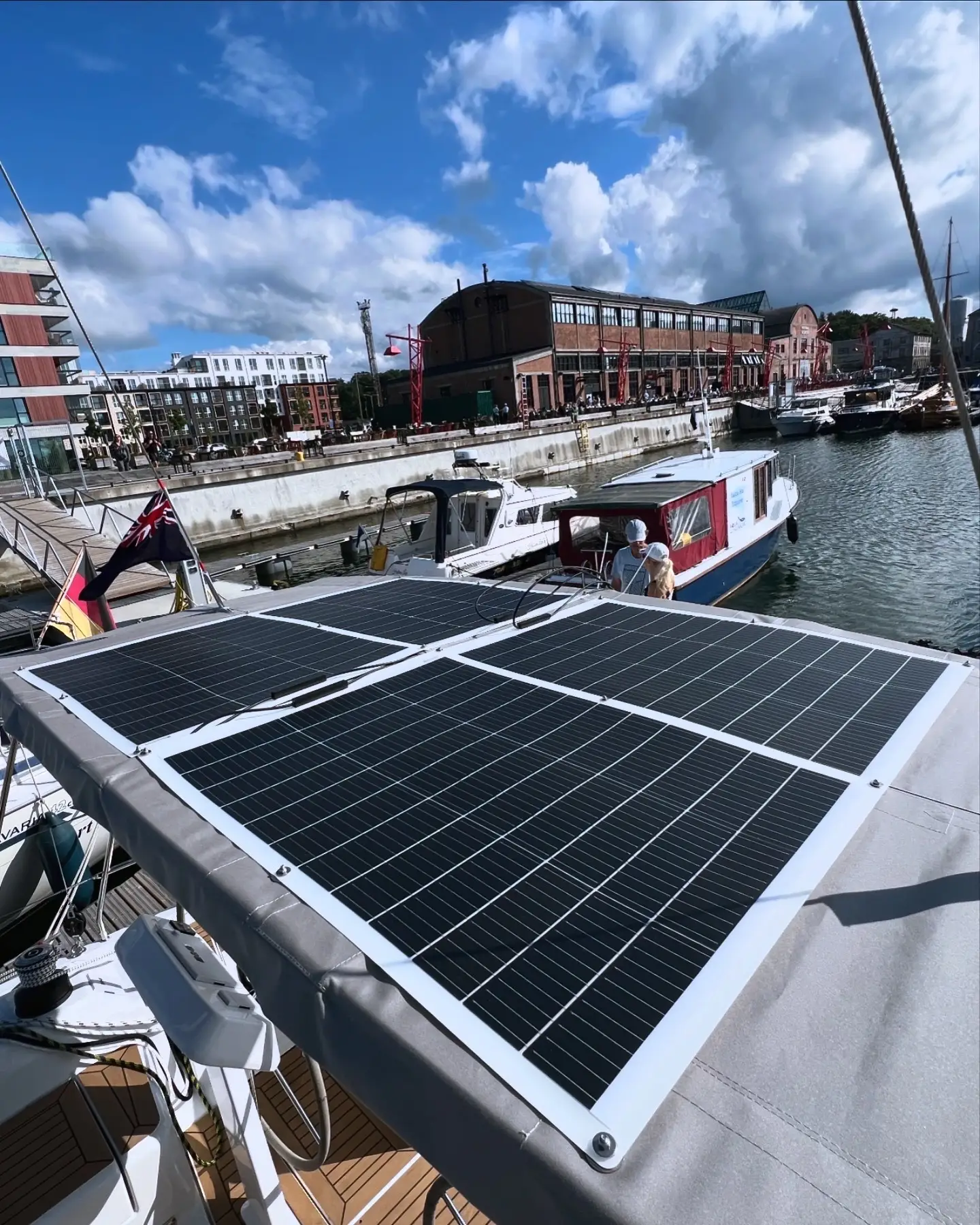
Flexible & Semi-Flexible: These are tempted for curved surfaces or if you’re weight-obsessed. They’re great for sticking on a coachroof, but keep in mind: heat is the enemy of solar. A rigid panel with airflow underneath will always out-perform a flexible panel glued to a hot deck.
2. The Mounting Playbook
The Solar Arch (The Palace): If you’ve got a large cruiser, an aft arch is the ultimate solution. It gets the panels high, away from the shadows of the mast and sails, and provides a sturdy handhold for when things get sporty.
Rail & Stanchion Mounts: This is the “Quick Win” for most sailors. Using adjustable rail mounts (like our Gemini Split Jaw mounts) allows you to angle the panels toward the sun. Remember: a panel in the shade of the boom is just a very expensive piece of glass.
Bimini Mounting: You can zip or Velcro panels to a bimini, but if you’re using 400W folding panels like the EcoFlow, you need support. Don’t just let the fabric take the weight; add a rigid stainless strut to the frame to prevent the canvas from sagging and “puddling” in the rain.

3. Avoiding the “Amateur Hour” Blunders
The Shadow Killer: Even a single line (like a topping lift) casting a shadow across a panel can cut its output by 50% or more. Before you bolt anything down, watch how the shadows move across your boat during a full day.
The “Tarp” Trap: Never just “tie” a solar panel down. If air gets under it at 20 knots, it becomes a wing. Use marine-grade stainless steel hardware (316 grade or nothing) and through-bolt wherever possible.
Hardware Choice: Snaps and Velcro are fine for the harbor, but for blue water, you want Gemini concave post mounts. You want a connection that doesn’t vibrate your teeth out when the wind picks up.
4. Maintenance – the Seadog’s Secret
Salt is the enemy of efficiency. A thin layer of salt crust can drop your charging rate faster than a cloudy day. Rinse your panels with fresh water whenever you’re rinsing the boat. While you’re at it, check the mounts. If it wiggles, it’s failing.
The Bottom Line
Solar panels aren’t just for “reduced environmental impact”—they’re for the freedom to stay at anchor for a week without hearing a noisy generator. Whether you’re building a custom solar panel frame or mounting to a rail, do it once, and do it right.
Ready to power up? Shop our Solar Mounting Hardware or ask us about custom frames for your boat model.